

CDC Dramatically Changes its Position on Autism and Vaccines
'Scientific studies have not ruled out the possibility that infant vaccines contribute to the development of autism'

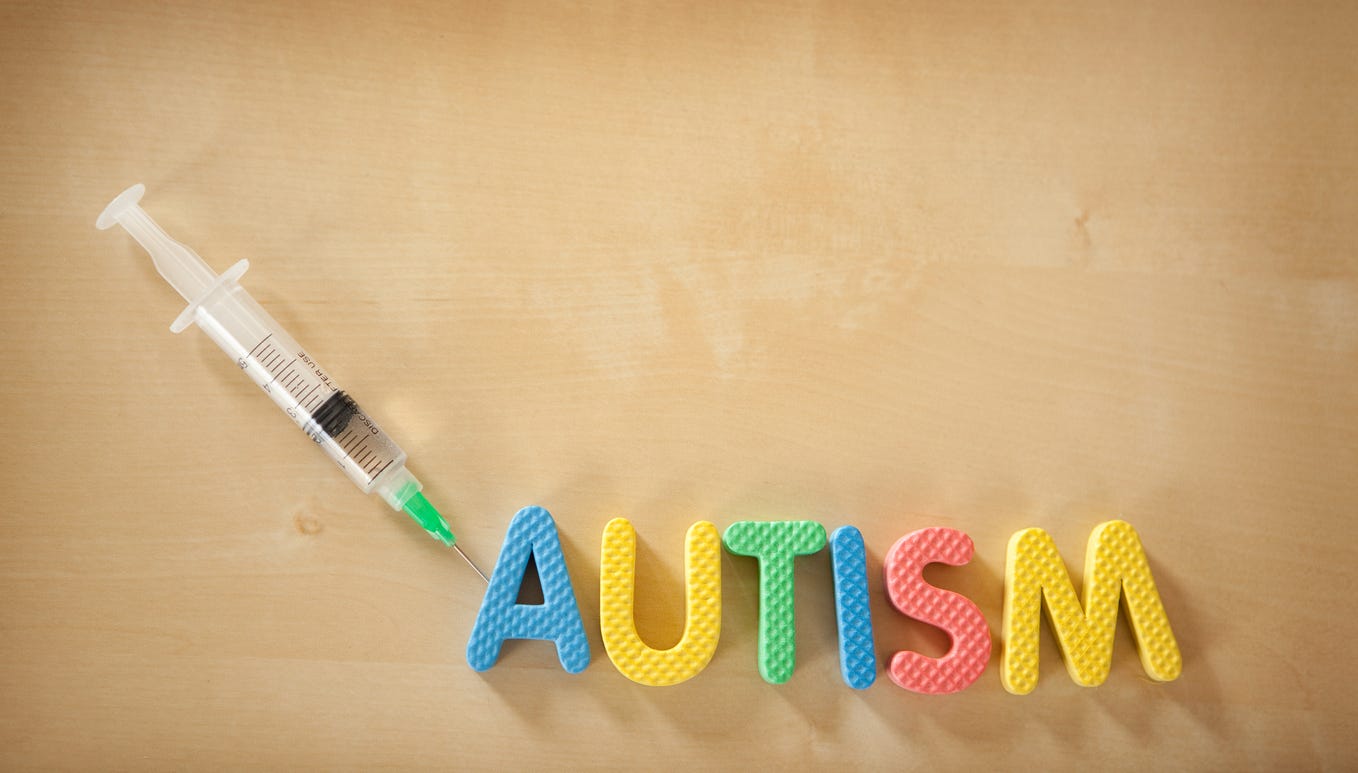
The Centers for Disease Control and Prevention (CDC) has dramatically revised its position on autism and vaccines to suggest they may be linked, reversing the agency’s longstanding claims.
Until this week, the CDC’s “Autism and Vaccines” webpage stated plainly that “Vaccines do not cause autism” and emphasized that research had found “no link between receiving vaccines and developing autism spectrum disorder (ASD).” The site had also said that “vaccine ingredients do not cause autism.”
As of November 19th, that statement now appears with an asterisk. Beneath it, the CDC has added a note saying the categorical claim was “not an evidence-based statement” under the standards of the federal Data Quality Act. The agency wrote:
“Scientific studies have not ruled out the possibility that infant vaccines contribute to the development of autism. However, this statement has historically been disseminated by the CDC and other federal health agencies within HHS to prevent vaccine hesitancy.”
The CDC says HHS has launched a “comprehensive assessment” into the causes of autism, including an examination of “plausible biologic mechanisms and potential causal links.” The webpage will be updated further as that review progresses.
The revised page also notes that “approximately one in two surveyed parents of autistic children believe vaccines played a role in their child’s autism.” It references research that found a correlation between rising autism diagnoses since the 1980s and the increasing number of infant vaccines.
One study cited by the agency reported a statistical correlation between aluminum adjuvants in vaccines and autism prevalence.
The updated page also summarizes longstanding gaps in the scientific literature, saying that multiple studies have found no direct studies demonstrating that several commonly used infant vaccines do not cause autism—an absence the agency says required it to correct earlier categorical statements.
“There are still no studies that support the claim that the infant vaccines DTaP, HepB, Hib, IPV, and PCV do not cause autism,” the CDC wrote.
Secretary Kennedy: The CDC Suppressed Data
The update comes months after HHS Secretary Robert F. Kennedy Jr. revealed in an interview with Tucker Carlson that the CDC had suppressed research on autism and the Hepatitis B vaccine. Kennedy said the CDC conducted a 1999 analysis examining autism rates among infants who received the Hepatitis B vaccine within the first 30 days of life. He said researchers were “shocked” to find a 1,135% increase in autism in that subgroup. According to Kennedy, the agency buried the data.
“They kept the study secret,” he said. “And then they manipulated it through five different iterations to try to bury the link. And we know how they did it: they got rid of all the older children essentially, and just had younger children who were too young to be diagnosed.”
The study on the Hep B shot was not the only evidence on autism and vaccines that was discarded. Kennedy stated in his interview with Carlson that the diphtheria, tetanus, and pertussis (DTaP) vaccine was also linked to autism, based on data from the CDC’s Vaccine Adverse Event Reporting System (VAERS), which the agency uses to monitor vaccine safety. But when VAERS showed a link to autism, the medical community dismissed the data by claiming VAERS was “unreliable.”
“[W]hat they were saying—the Institute of Medicine, which is part of the National Academy of Sciences . . . [was] that the only system CDC has to study vaccine injury is so bad that any study done on it we’re not going to count,” Kennedy said.
The Institute of Medicine reportedly admitted that out of over 10 shots given to infants within the first six months of life, DTaP is the only one that was studied for links to autism.